A sleepover and a spin in Mom’s car: How one FHP chase turned deadly in PascoBrittany Wallman and Sofia Saric Mon, November 2, 2026 at 2:01 PM UTC
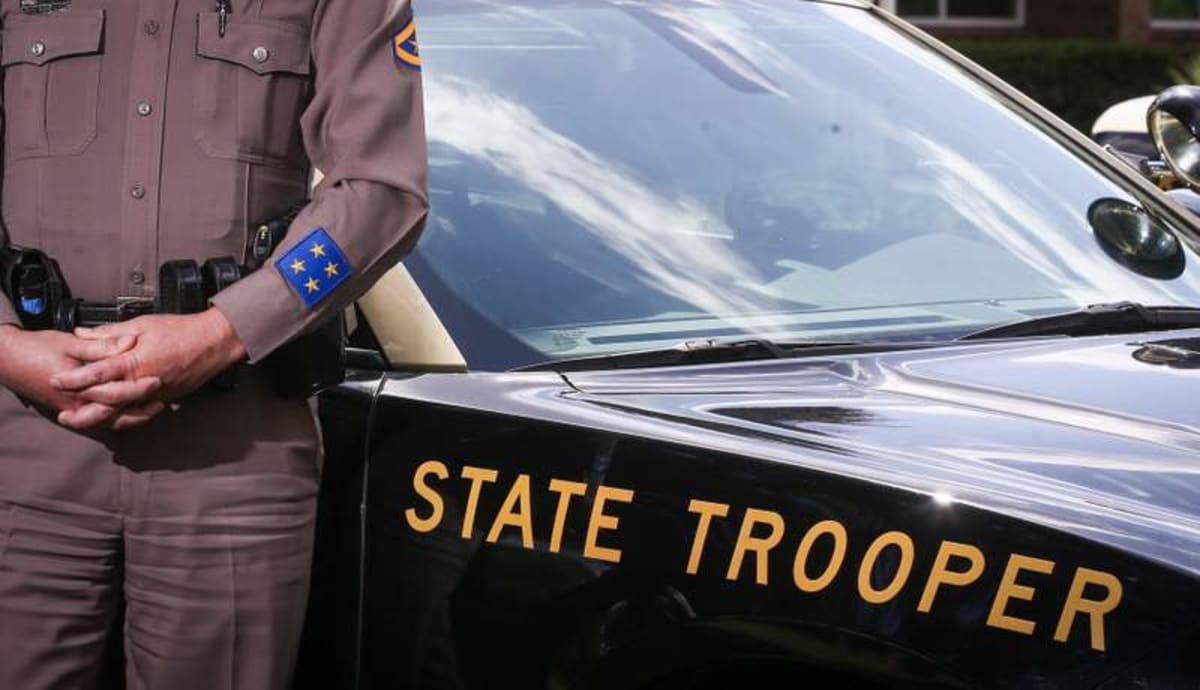
Since 2023, the Florida Highway Patrol has given its troopers license to chase and use a controversial maneuver to plow into drivers who don't stop for them. In the past three years, 34 people have been killed in pursuits with the agency — nearly 1 in 3 of which were bystanders. ©Dirk Shadd
On a summer evening on Florida’s west coast, a father dropped his 15-year-old son off for a sleepover. It was a Saturday night, and his wife planned to pick up the boys in the morning for church. Darlene Swain peeked at her cellphone several times that evening, checking on her son Brody’s location. He was where he was supposed to be, it seemed.
They spoke at 10:30 p.m. She told Brody good night, and for the millionth time, she told him that she loved him. “Stay safe,” she said.
Her husband, Bob, woke her up the next morning, July 26. Her birthday. He’d been backing out of the driveway to head to the gym when officers pulled up. Something terrible has happened; get to the Tampa hospital, they said.
Brody Robert Swain, 15, a rising sophomore at River Ridge High School, was buried the following weekend. He is one of 34 people — at least five of them teenagers — killed in pursuits with Florida Highway Patrol troopers in the nearly three years since the agency gave its troopers license to chase and use a controversial maneuver to plow into drivers who don’t stop for them.
Brody and his friend, who was driving, had taken the friend’s mother’s car without permission.
After the policy change, enacted in December 2023, the number of Highway Patrol pursuits tripled, and almost five times more people were killed, a Miami Herald investigation found. Hundreds of people, including more than 100 troopers, were injured.
Almost one-third of the dead were innocent parties who were not involved in the alleged crime. More than 180 innocent people also were injured, the Herald found.
Other law enforcement agencies forbid or tightly regulate the pursuit maneuvers that FHP freely allows — including intentionally hitting cars at high speed and chasing someone in the wrong direction on a highway. Other agencies restrict pursuits to violent criminals; the Highway Patrol’s policy encourages troopers to chase anyone who flees from a traffic stop, “to answer for their criminal conduct.”
Swain said the trooper’s actions that night leave her wondering why. Her son was not a criminal; he’d never been in trouble, she said.
“I never had an issue with him, ever,” Swain told the Herald. “He was definitely a momma’s boy. We were just as thick as thieves.”
He was her “miracle” child, born when she was 40 and already had a teenage daughter at home. He was an athlete devoted to playing soccer, and very involved in their church, The Chapel. He dreamed of becoming an Air Force pilot; he was taking classes to get his license. The family lived in an aviation-themed neighborhood in New Port Richey, on Cessna Drive. Brody’s life was just beginning.
Deaths soar after Highway Patrol loosens rules
Over a seven-month period, the Miami Herald collected state records, data sets and legal filings on pursuits, car crashes and fatalities involving the Highway Patrol, obtained and compared other law enforcement agencies’ pursuit policies, and interviewed policing experts and family members of those who died. The Herald’s lawyer had to twice threaten to sue the Highway Patrol to prompt the agency to fulfill the Herald’s public records requests.
The records show that for nearly three years now, Florida’s highways have been racing with troopers’ black-and-tan patrol cars chasing drivers, even for nonviolent offenses, leaving a trail of severe crashes, injuries and deaths.
The 34 deaths show an immediate consequence of the loosened FHP chase policy. In the prior three years, only seven people died in Highway Patrol pursuits, according to the agency. In 2024 alone, the first year under the new policy, 17 people died in pursuits, the Herald found, compared with five the year before. The number of pursuits and PIT maneuvers also soared after the policy change — both more than tripling.
Innocent people who had nothing to do with the trooper pursuits made up nearly 1 in 3 of the fatalities, Highway Patrol pursuit data shows. Ten of the 34 dead were not involved in the chase — like Bonnie Bouffard, 74, in Broward County.
She pulled to the side of the Florida Turnpike one February afternoon at rush hour to make way for a high-speed chase. Highway Patrol Trooper Bernard Major, driving 90 miles an hour in the far-right breakdown lane, rammed the suspect’s truck right into Bouffard’s car, video of the crash from the trooper’s dashboard camera shows. Broward deputies took turns performing CPR, but she died lying shirtless, in a pink bra, on the highway.
The suspect, Laiken Lynn Randolph, was fleeing from law enforcement in a pickup truck they said was stolen. The truck had a tracker in it, and a police helicopter overhead was surveilling it. An internal investigation remains open, a Highway Patrol spokesperson said.
Four innocent adults also died in Ybor City in Tampa on Nov. 8, 2025, when a speeding suspect careened into a crowd of people outside a bar, Bradley’s on 7th. Trooper Alejandro M. Carrasco had attempted a PIT maneuver, chased the driver to the Ybor City bar district arches, then backed off just moments before the crash.
The suspected crime was nonviolent; the driver, 22-year-old Silas Kenneth Sampson, was spotted driving recklessly. Sampson was charged with the deaths and 43 other charges and is awaiting trial.
William Smith, union president of the Highway Patrol chapter of the Florida Police Benevolent Association, said troopers “don’t want anybody hurt, and the best way that will happen is if people will obey the law and stop whenever we pull in behind them with our lights and sirens on. So, they choose; they choose to break the law. They choose to put other people in danger and in harm’s way.”
License to kill
One of the first to die after the policy change was one of the agency’s own troopers, 26-year-old Zachary Fink, who was chasing a speeding driver southbound on Interstate 95 in St. Lucie County on Feb. 2, 2024. The suspect, Michael Anthony Addison, veered across three lanes of traffic into the grassy median to attempt a U-turn. Fink did the same, crossing directly into the path of a semi.
The trooper and the truck driver, 55-year-old Arsenio Mas of Homestead, were killed. Fink was called a hero by Highway Patrol leaders, and a portion of the highway was named in his memory. Mas’ family sued, and the Highway Patrol settled the case for an undisclosed sum earlier this year. Addison, now 32, was charged with the deaths, pleaded not guilty and is awaiting trial.
By the end of that year, 17 people were dead from Highway Patrol pursuits, including four teenagers in a stolen car who were fleeing a trooper near the Alachua-Bradford county line in north-central Florida. The trooper intentionally struck their vehicle at high speed using a PIT maneuver; they died in the subsequent rollover crash.
The PIT, or Precision Immobilization Technique, is a spin-and-stall maneuver where the chasing officer aligns his front bumper with the rear quarter panel of a fleeing vehicle and turns sharply into it, breaking the rear-tire traction and forcing the car into an abrupt spin. It’s a controversial tactic and highly restricted at most agencies.
But the Highway Patrol, under a new leader appointed by Gov. Ron DeSantis, now encourages it.
The trooper chasing Brody and his best friend hit them with a PIT maneuver, the Highway Patrol said. They’d snuck out in his friend’s mother’s car. The friend, also 15, was at the wheel — a new driver with a learner’s permit. The Herald is not identifying the teen because he is a minor.
It’s unclear at what speed the trooper conducted the PIT, but the Highway Patrol said that during the pursuit, the teenagers reached speeds up to 115 mph.
The results were devastating. The driver was seriously injured, and Brody was killed. In a public statement after the fatal crash, the agency called the maneuver successful.
Brody’s mom said she doesn’t “see it as any different from them shooting two 15-year-olds for speeding.”
Other agencies restrict chases
The Herald collected pursuit and PIT policies from 12 of Florida’s largest county and city law enforcement agencies and found that the Highway Patrol stands out with the most permissive approach.
At the other end of the spectrum are agencies like the Miami Police Department and the Miami-Dade and Palm Beach County sheriff’s offices, all of which heavily restrict chases and car-to-car contact.
The Miami Police Department’s policy says in bold, “All pursuits, other than violent felony offenders, are prohibited.” Wrong-way driving is banned, and PIT maneuvers are only allowed if deadly force is justified.
The Miami-Dade Sheriff’s Office strictly forbids PIT maneuvers, calling them “unsanctioned.” The agency also does not allow deputies to push into or ram cars using the front bumper, as the Highway Patrol trooper did in the Bonnie Bouffard case. Deputies are warned about “increasing the danger already caused by the subject being pursued” and told they will be held “accountable for the consequences.”
“The overriding concern must always be for the safety of the deputies and the community,” the policy says. “In this regard, the decision to abandon pursuit may be the most intelligent course of action.”
The Palm Beach County Sheriff’s Office says maneuvers to force a car to stop “are considered deadly force and may be utilized as a last resort.” The policy tells deputies they will not be disciplined or even criticized for deciding not to chase someone, or for terminating a chase.
Sheriff’s offices in Miami-Dade, Palm Beach, Jacksonville and Pinellas and Broward counties reserve pursuits primarily for violent felons, with some exceptions for other emergencies.
Looser, more dangerous
In contrast, the Highway Patrol’s new policy gives troopers great leeway.
“Members may drive on the wrong side of the roadway, in the wrong direction, or on the shoulder for the purpose of immobilizing an immediate threat to the public,” the policy states.
Stopping fleeing suspects was named a primary Highway Patrol goal, and the agency designated the controversial PIT maneuver as “the primary technique.”
Troopers are cautioned to weigh the risks and told that “preservation of life is a foundational duty,” but they can chase, ram or PIT any driver who refuses to stop, no matter what the original suspected crime is, the policy says. Cases examined by the Herald included pursuits over speeding, like the chase that killed Brody, or suspected stolen vehicles, like the chase that killed Bouffard.
The policy is based on their advanced training, it says, and the fact that troopers “have consented and are willing … to put their safety in jeopardy to both protect the public at large and ensure violators of the law are apprehended and held accountable for their dangerous criminal behavior.”
‘Puts you in a ditch’
The more permissive policy emerged under the leadership of Dave Kerner, head of the Florida Department of Highway Safety and Motor Vehicles.
Kerner, 43, a former Palm Beach County commissioner and state legislator, made national headlines for crossing party lines in September 2022 to endorse DeSantis in the governor’s race over Democratic challenger Charlie Crist, claiming Crist wanted to take money away from law enforcement.
“This was not a difficult choice for me,” Kerner said during a news conference posted on X. “This was not the proverbial lesser of two evils. Gov. DeSantis has demonstrated himself beyond worthy of the humbling duties of this office, and he has done so with a level of dignity, purpose and respect that is lost in the public sphere today.”
DeSantis took his second-term oath of office on Jan. 3, 2023. Three days later, he appointed Kerner as interim executive director of the Florida Department of Highway Safety and Motor Vehicles; DeSantis and his cabinet confirmed him as executive director on Jan. 17.
Kerner, in turn, appointed Col. Gary Howze to directly oversee the Highway Patrol. Kerner and Howze did not respond to requests for a Herald interview or to a series of questions about the policy’s risks to the public.
The same year Kerner took office, the Police Executive Research Forum, a nonprofit police think tank, published a landmark study of police pursuits that was commissioned by Congress and financially supported by the U.S. Department of Justice.
The 160-page report found only two scenarios that should justify a pursuit: “(1) A violent crime has been committed and (2) the suspect poses an imminent threat to commit another violent crime.”
The forum could not agree on whether to endorse PITs, noting that “it has been used successfully in some situations, but in others it has resulted in deaths to innocent community members and fleeing suspects.” The forum agreed that supervisor approval should be required beforehand, and that “the seriousness of the crime for which the suspect is wanted is highly relevant” to that decision.
The forum also reminded police departments that there is no research that defines a safe and effective speed for the maneuver.
“It is clear that the higher the speed, the more dangerous the PIT and the greater the likelihood of injury or death,” the Washington, D.C.-based police think tank advised.
“The bar (for chasing) should be very high,” said Chuck Wexler, executive director of the Police Executive Research Forum. “We’re talking about the sanctity of human life, and that’s ultimately what policing is all about, is preserving and protecting lives.”
During the Sept. 26, 2023, episode of the “Donut Shop” Podcast, Kerner told host Justin Yarro that the Highway Patrol views “things very differently than a lot of other agencies … I encourage them to participate in pursuits.”
In the podcast, first reported on by TCPalm, Kerner said that “if we can’t provide value to the city police departments and the sheriff’s offices, then we don’t have a strong future.”
“My direction,” he said, “is that if the vehicle flees, then a PIT maneuver should be executed as soon as practical thereafter.”
Kerner said he recalled a trooper worrying she’d get disciplined over it. He said he doesn’t “want a trooper to ever second-guess themselves when they’re in an enforcement posture.”
“Every time we shut our lights off and let someone go, that cancer grows,” Kerner said on the podcast. “Motorcyclists, people that drive these fast cars and do these road rage intersection type stuff, they run for the fun of it. And if you have a trooper behind you, it’ll be about 10, 15 seconds before that trooper PITs you and puts you in a ditch. And that’s what we’re doing in Florida.”
Kerner did not respond to the Herald’s questions in October about whether his opinions have changed.
FHP “encourage(s)” pursuits
When Kerner took over, the Highway Patrol was struggling for money from state legislators. He thought the agency faced an existential crisis and needed a “broader mission to survive,” he said in a podcast episode.
Since then, the agency took on its new pursuit role, and also signed on to help Immigration and Customs Enforcement find and detain illegal immigrants.
The Highway Patrol’s operating budget has grown about 72% during the past decade, according to records released on the state website Transparency Florida. The agency’s budget increased from more than $252 million in fiscal year 2016–2017 to about $433 million in fiscal year 2026–2027.
‘They can’t forget’
The night of Brody’s sleepover, at 3:45 in the morning on July 26, a trooper saw a Chevrolet Traverse SUV speeding 74 in a 45-mph zone. Brody’s friend was driving, and they were on State Road 54 in Pasco County, a four-lane road with a median in the middle, in a suburban area.
The Highway Patrol has refused to identify the trooper to the Herald, the Herald’s lawyers or Brody’s parents, citing an open investigation.
“It really feels like the entire system is built to protect itself rather than the victims,” a frustrated Swain told the Herald.
Highway Patrol Sgt. Steve Gaskins said in a written statement after the crash that the trooper tried to stop the young driver, who sped up to 115 mph and fled.
When the trooper struck the teens with a PIT maneuver, the SUV struck a utility pole, and then a tree, according to Gaskins.
The agency said the boys were not wearing seat belts and had alcohol in the car but refused to release more details to the Herald, including whether either teen had consumed alcohol. The medical examiner refused to release the autopsy report, citing the open investigation. Swain said she also has not been able to obtain it.
In a statement, the Highway Patrol said the PIT maneuver was “successfully conducted.”
The State Attorney’s Office in Pasco County said it has not received the investigation from the Highway Patrol and hasn’t made a decision on whether to file charges against the teen driver. Brody’s parents advocated for him in a character witness statement, urging that he not “spend a single day in jail.”
“(He) is only fifteen years old,” the Swains wrote in a letter shared with the Herald. “He is not a criminal. He is a good, kind and caring young man who experienced the worst day of his life and will carry the weight of that day forever.”
In an interview, Swain said the boys were just “kids being kids,” while the trooper, the only adult involved, engaged in an aggressive pursuit over a speeding offense.
“I 100% blame the trooper,” Swain said.
‘Neither one of us are doing OK’
The day after Brody died, the Highway Patrol sent troopers to the Swain household under the guise of offering condolences, she said. Then they started asking her questions. Lots of them. What kind of kid was Brody? Had he snuck out before?
Swain said they weren’t there to offer sympathy. It “was definitely an inquisition,” Swain said. Highway Patrol officials did not respond when asked by the Herald about her characterization.
At Brody’s funeral, neighbors, family, friends, every coach he ever had filled the service. Afterward, at home, his friends gathered in Brody’s bedroom, listening to music and mourning him.
Online, memories poured in to a memorial website. And then there’s this post: “Missing you every minute of every day. Love, Mom and Dad”
“Neither one of us are doing OK,” Darlene Swain told the Herald, explaining that she’s speaking out in hopes it will help someone else.
“How can I make a difference?” she said. “How can I change the laws, so that nobody else has to experience this?”
Swain said every day she has visited his grave site or the crash scene. She picked up the litter and brought her own weed-eater to spruce up the grounds. She mulched, planted flowers and erected three crosses. And she hung lights, so the spot where her boy was killed is visible in the dark.
“I wanted it to be lit up at night,” Swain said, “so when FHP drives by, they can’t forget what happened there.”
Miami Herald staff writers Shirsho Dasgupta and Devoun Cetoute contributed to this report.
Source: Crime



0 Comments