What prison life will be like for Russell Brand
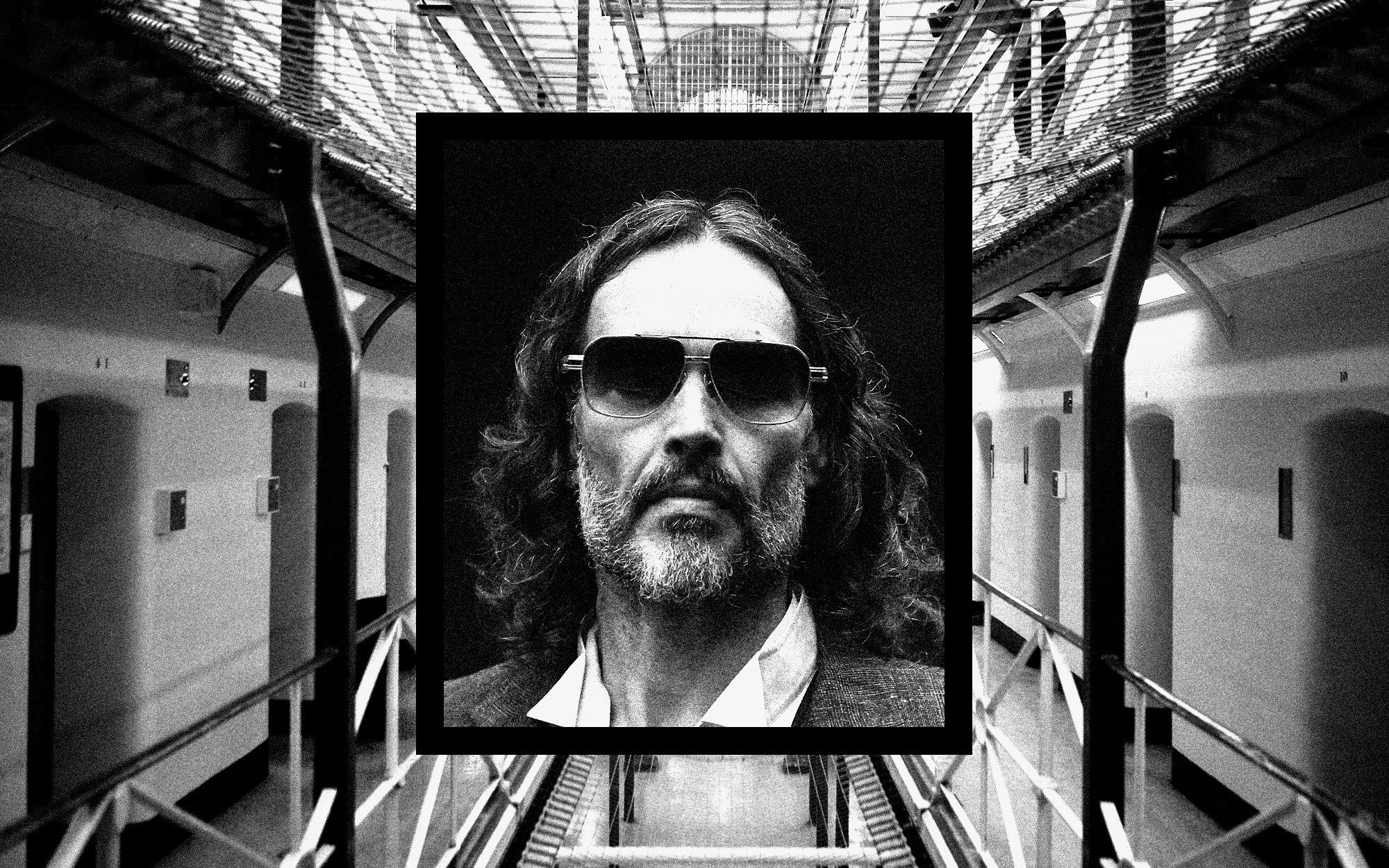
After being led away from the dock to start his 10-and-a-half-year jail sentence, Russell Brand will clamber on board a prison van and into a plastic cell known as a “sweatbox”.
Smaller than a toilet cubicle, the claustrophobic, airless chamber is used to hold individual prisoners en route from court to jail. While it keeps the convicts apart, it still offers a hint of the kind of company they may be keeping for the foreseeable future.
“The van will take everyone sentenced that day, so you can get murderers, burglars, gang members, the lot,” says one ex-prisoner who was held on remand at a London prison. “You can hear some of them doing their nut, saying they’re gonna stab people, or top themselves. It’s pretty scary.”
After being sentenced, Brand, 51, is likely to be taken to a holding prison in London. He is understood to have been held on remand at HMP Wandsworth – a grim Victorian jail notorious for overcrowding and violence – since his conviction on rape and sexual assault charges last week. Upon arrival through the prison gates, he will be strip-searched and asked to sit in the “BOSS chair”, or the “body orifice security scanner”, which is the modern answer to the old-school “rubber glove” treatment.
Brand, who appeared in court on Monday in a dark suit and white open-necked shirt, his hair in its signature topknot, will then change into prison clothes – typically a sweatshirt and jogging bottoms – and given a mental health assessment to check whether he is a suicide risk. He will also get a welfare phone call to family or loved ones, strictly limited to two minutes.

Russell Brand has been sentenced to 10 years and six months in prison for rape and sexual assault - Press Association/Elizabeth Cook
At 6pm, the cell doors will shut until morning, and Brand will begin his first night as a sentenced prisoner. According to Doing Time, a website run by volunteers to guide first-time inmates, this is often the hardest period of all.
“The first night tends to pass very slowly, as it has for countless prisoners before you,” the website’s guidance reads. “Every horror story you’ve ever heard about prison will probably run through your head, and if you’ve seen The Shawshank Redemption, you’ll be bracing for the worst.”
In reality, Brand may not have to mix it among the gang lords and Mr Bigs. As both a convicted rapist and a celebrity, he will probably be held with other sex offenders on a vulnerable prisoners’ wing, away from the mainstream population, where he could face attack. According to The Sun, he has been allocated a single cell at HMP Wandsworth as an extra precaution.
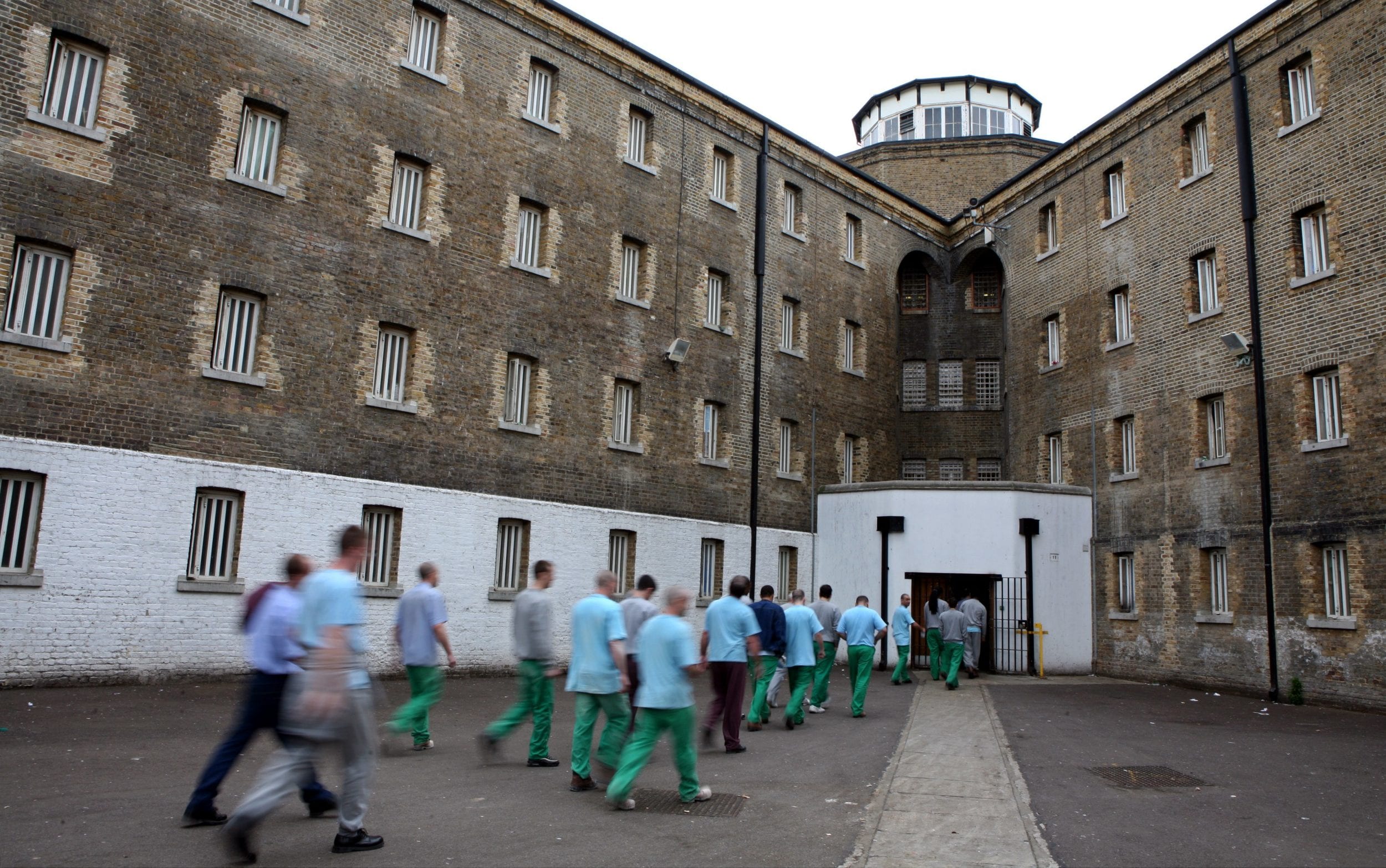
Brand is understood to be currently held at HMP Wandsworth – a grim Victorian jail notorious for overcrowding and violence - Getty Images)/Andrew Aitchison
“In the league table of prisoners, sex offenders are considered to be in the relegation zone,” says an adviser to Prison Consultants, a privately run advice service staffed partly by ex-offenders.
Technically, even sex offenders can opt to stay in the mainstream population, something that a narcissist like Brand, who appears in denial about his guilt, might seek to do. However, the final say on that rests not with him, but with the prison governor.
“Housing him with other sex offenders will be partly for his own safety, and partly to avoid any disruption to the wider prison population,” says the adviser. “Their attitude will be that if he’s allowed to mix freely, he could create problems because of his celebrity, which could lead to a breakdown in good behaviour.”
Indeed, aside from his trip in the “sweatbox”, the nearest Brand may come into contact with the “mains” will be during his time in the reception wing, where the vulnerable prisoners are housed near the non-segregated population. He may face verbal abuse from “window warriors” – inmates who shout threats from afar.
As a prisoner, Brand is unlikely to be deemed a danger to other inmates or the wider public: the judge who sentenced him noted that it was 17 years since his last offence, and that he had spent part of that time helping others with addictions. As such, he will likely be classified as a “Category C” or “low-risk”. That may see him transferred to spend the bulk of his sentence in a sex-offenders-only jail, such as HMP Littlehey in Cambridgeshire. Such jails offer specialist treatments designed to address sexually predatory behaviour and are generally less violent and drug-ridden than mainstream prisons.
“A lot of sex offenders are older people who’ve led normal working lives and otherwise haven’t been involved in criminality,” says one ex-inmate of Littlehey. “Animosity is usually reserved for people who’ve committed crimes of a particularly heinous nature against children. If Brand keeps his head down, he won’t be in a lot of jeopardy.” As such, Brand may not need to lean into his schtick as an ex-drug addict and working-class boy who has struggled against the odds, two personas he might have deployed to try to fit in a mainstream jail.

Brand could spend the bulk of his sentence in a sex-offenders-only jail, such as HMP Littlehey in Cambridgeshire - Corbis Historical/Andrew Aitchison
Cells in Category C prisons are typically equipped with single or bunk beds, plus a partially partitioned toilet and a TV with basic terrestrial channels. Brand will probably have to share a cell for at least part of his sentence – single cells are much sought-after – although as a celebrity inmate, he will have as much right to privacy as anyone else. Prisoners are explicitly prohibited from disclosing information about other inmates in any way that identifies them. For example, by feeding tips about Brand’s prison life to the media.
Day-to-day, prisoners are generally expected to work, typically in their jail’s laundry or kitchens, or in a carpentry or textile plant. There are education classes in everything from literacy to cookery and history – some are taught by inmates with relevant expertise.
In return for their labours, inmates can earn weekly credits of £15-£20 for the prison canteen, which sells snacks, drinks, personal hygiene products and tobacco. With hard cash forbidden, products such as tinned tuna and vape refills are traded as an informal currency.
As a born-again Christian – Brand was baptised in the Thames by adventurer Bear Grylls in 2024 – he could also be tempted by the Bible group classes offered in many prisons. Some fear that Brand, who has also dabbled with Buddhism and Hinduism, could also use these to promote his own cult of personality, rebuilding the status he once enjoyed in showbusiness, politics and the media.
However, prison may be one place where Brand’s charisma, cheek and vim may struggle to weave its spell. Inmates who try to preach or hold sway over others are always regarded as a potential security risk, be they gang leaders, Islamist terrorists, or ex-politicians.
“He’ll find out that he’s got to knuckle down, otherwise the system will break him,” says the adviser. “That is what we always tell people. He will eventually find friends, yes, but he’ll have to ask himself: ‘Are they friends because they like my character, or because I’m rich and might help them in some way when I get out?’”
Brand may well have researched how previous celebrities have coped in jail, particularly those convicted by Operation Yewtree, the 2012 police investigation into sex abuse claims against media personalities.
Rolf Harris, the TV artist who served five years for indecent assault charges, worked in the garden at HMP Bullingdon and curried favour with fellow inmates by doing sketches of them. Max Clifford, a PR guru who was jailed for eight years at HMP Littlehey on indecent assault charges, helped other inmates with legal letters and communiqués to MPs.
Less successful was Gary Glitter, the 1970s rocker serving 16 years at HMP Channings Wood for child sex offences. He sang his greatest hits at a Christmas karaoke at HMP The Verne in Dorset, only to be booed off by his prison audience.
The biggest challenge for Brand may be the lack of contact with his loved ones. His mother, who has battled cancer for much of her life, is now 79, raising the possibility that she may not see her son as a free man again.
Meanwhile, Brand’s wife, Laura Gallacher, and their three children moved to Florida in 2024, ostensibly to escape media scrutiny. Should they wish to have regular prison visits with Brand, they may have to return to Britain.
However, incarceration may not entirely cut Brand off from his wider fan base, which runs to some 24 million fans across different social media platforms. While he will be banned from messaging them directly, there is little to stop him from giving updates on life in jail via letters to his family, who could then reproduce them as long as he does not write about other prisoners or his victims.
Indeed, those who still subscribe to his anti-establishment world-view may well already be convinced that he was framed, and be keen to learn of his further adventures behind bars. Brand has already reinvented himself many times for his fan base – from comedian, lothario and media darling to conspiracy theorist and born-again Christian. Celebrity jailbird might well be his next role, albeit one that he may be stuck with for many years to come.
Source: Crime



0 Comments